Does WFH lead to deep vein thrombosis? It’s not about sitting down but weight gain
Advert
Health
Does WFH pb to deep vein thrombosis? It'south not about sitting down but weight gain
When it comes to DVT, weight gain that progresses into obesity and ageing are more of a hazard factor than prolonged sitting, an expert tells CNA Lifestyle.

(Photo: Freepik/marymarkevich)
01 Dec 2022 06:30AM (Updated: 08 Aug 2022 11:37PM)
With all the butt contact you lot've been making with your chair since work-from-home (WFH) arrangements began before this year, y'all might have wondered at some point: Are you at gamble of developing deep vein thrombosis (DVT)?
After all, isn't the condition caused past a lack of movement – which is why long-haul air travel in I-can't-feel-my-legs-anymore economy form has long been considered a major take a chance cistron for DVT?
Although no 1'due south doing whatever travelling these days, most of us are stuck at domicile sitting down. And while WFH may accept a link, it's not most sitting for extended periods of time. Rather, it's the weight gain that exacerbates into obesity that can put you at risk.

More DEEP VEIN THROMBOSIS
Kickoff, some groundwork on DVT. Y'all may have read well-nigh it and have an idea on how the condition comes virtually: Claret clots in the vein travel to major organs, block claret flow and create a whole lot of trouble. Depending on where the clots finish up – for instance, the center, brain or lungs – they can crusade a eye attack, stroke or difficulty breathing.
The broad term for blood clots that kickoff in the veins is venous thromboembolism or VTE. And depending on where the clots form or travel to, they tin be either known as DVT or pulmonary embolism (PE), according to Dr Yap Eng Soo, a senior consultant at the Department of Haematology-Oncology at National University Cancer Institute, Singapore.
According to the American Heart Clan, patients older than 40 years are at higher risk of venous thromboembolism, and that risk doubles with each subsequent decade.
"DVT occurs when a blood clot forms in ane or more of the deep veins in the body, unremarkably in your legs," he said. "If the claret jell forms in the arteries of the lungs, or if the clot migrates from the deep veins of the leg to the arteries of the lungs, it is termed pulmonary embolism (PE)."
And the latter shouldn't exist taken lightly; PE has a fatality rate of effectually ten per cent to 30 per cent, noted Dr Tan Chuen Wen, a consultant with Singapore General Hospital's (SGH) Department of Haematology.

Both DVT and PE can occur without any noticeable symptoms at all, said Dr Yap, although that is rare for PE.
If you notice swelling in your leg, and a cramping sensation or soreness in the dogie, y'all might want to get yourself checked for DVT. Co-ordinate to Dr Yap, DVT may too create redness or discolouration on the affected part of the leg along with a warm sensation.
READ: Experiencing painful, heavy periods? You might take varicose veins in the pelvic surface area
On the other paw, PE tin can present most commonly with a sudden shortness of jiff, chest pain that worsens when yous breathe, depression claret pressure, anxiety, dizziness, light-headedness, an irregular heartbeat or palpitations.
Dr Yap said that there can besides be sweating, coughing or the coughing upward of blood.
SO ARE YOU A SITTING DUCK FOR DVT?
Some of the more possible reasons for DVT cases – which were really on the ascent in the 1990s – are historic period and obesity.
"With an ageing population and increasing obesity in the population, VTE cases will increase," said Dr Yap. Increased sensation of VTE and better medical imaging may also play a office in picking up more than cases, he added.

According to the American Heart Clan, patients older than 40 years are at higher risk of VTE, and that risk doubles with each subsequent decade.
More reason to spotter your weight: Those with obesity have two times the risk of VTE every bit people with normal weight. And the higher the weight, the higher the run a risk, noted the association.
READ: Unexplained rashes: Why do they occur and when should yous come across a doctor?
If you lot remember your Biological science lessons, veins have valves to help blood flow back to the heart. But with age, these valves thicken and become less flexible, according to a report in the AHA Journals, rendering them less effective at facilitating blood menstruum. "This refuse can result in stasis and possibly even reflux," the report noted.
Every bit for weight existence a risk cistron, it can be attributed to the college adipose or fat cells in obese individuals. These cells can increase platelet activity as well every bit place the torso in a constant state of low-grade inflammation – both of which promote clot formation, explained News Medical website.
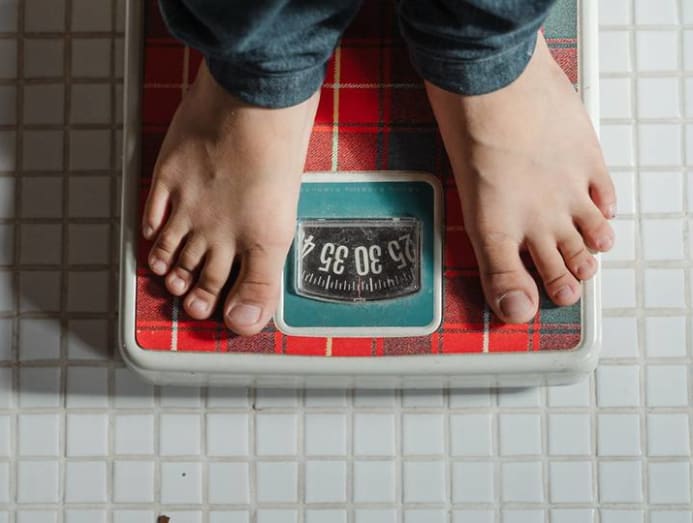
Every bit for sitting a lot more than, thankfully that's not an result per se. "Prolonged sitting and a sedentary lifestyle tin can only be considered as weak risk factors," said Dr Tan.
Manifestly, the key discussion here is "immobility", which refers to the "consummate or nearly-consummate immobility after a major operation or severe medical atmospheric condition such as a stroke", said Dr Tan.
Moving your body less does not authorize as immobility. The well-established adventure factors, co-ordinate to him, include:
- Recent trauma or surgery leading to immobility
- Pregnancy
- Use of hormonal replacement therapy or oral contraceptives
- Cancer
- Obesity
PREVENTION AND Handling
Even though the risk of developing DVT or PE from being on your tush 9-to-five is "likely to be very small", Dr Tan said that you lot could even so lower your chances even further with these tips:
- Have regular breaks every hour or two to stand up and walk around
- Make sure you accept enough space to stretch your legs
- Avoid crossing your legs for long periods of time
- Stay active and do regularly
- Stay well hydrated
- Avoid smoking

When it comes to treatment, patients are commonly prescribed anticoagulants or claret thinners. Such medications do not actually dissolve the blood clot, but rather, prevent the clot from condign larger, said Dr Tan.
They tin can besides foreclose new blood clots from forming, and to forestall long-term complications.
"Diverse anticoagulants, oral and injectable forms, are currently available and your doctor will talk over the options with you," he said, adding that the recommended duration is at least iii months.
Other treatments that may be used include thrombolytic therapy (commonly known as clot busters) or placing a filter (ordinarily known as an "umbrella") in a major blood vessel, explained Dr Tan.

Recent Searches
Trending Topics
Source: https://cnalifestyle.channelnewsasia.com/wellness/deep-vein-thrombosis-dvt-sitting-down-work-from-home-236016
0 Response to "Does WFH lead to deep vein thrombosis? It’s not about sitting down but weight gain"
Post a Comment